Packaged ETP Operations: Step-by-Step Standard Operating Procedure (SOP)

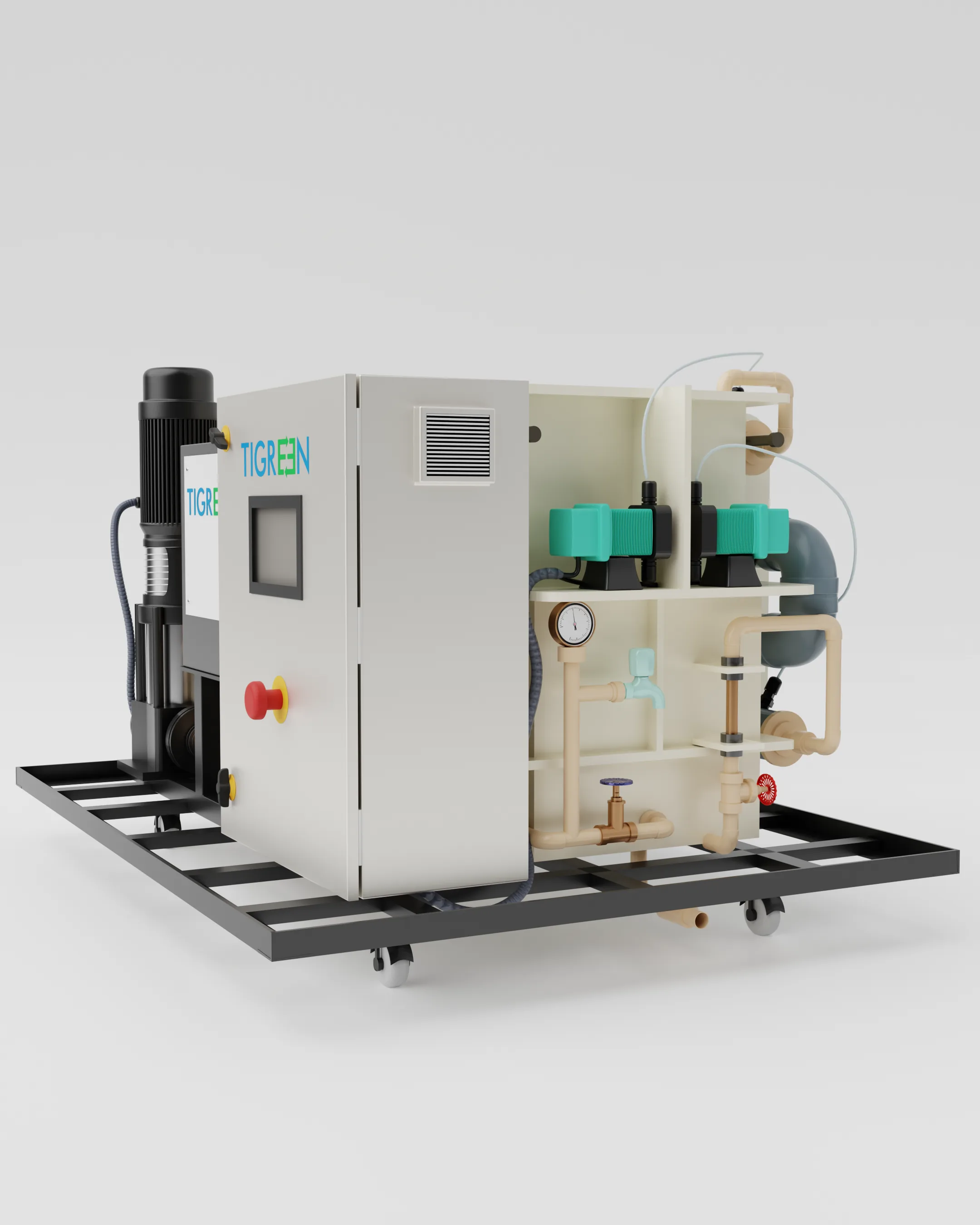
Standard Operating Procedure (SOP) for Packaged Effluent Treatment Plants
Operating a packaged industrial Effluent Treatment Plant (ETP) requires precise execution of pre-start audits, dosing chemical calculations, startup sequences, and routine maintenance tasks. This step-by-step SOP ensures stable compliance, efficient chemical consumption, and longevity of Tigreen's microbubble Dissolved Air Flotation (DAF) systems.
1. Daily Pre-Start Audits & Checklists
Before powering up the system, the ETP operator must verify the following items:
- Feed Water Levels: Verify the wastewater level inside all raw collection and equalization tanks.
- Duplex Filters: Inspect and clean the manual Duplex Filters installed immediately after the feed pump. Always keep one filter operational and one on standby.
- Chemical Tanks: Confirm that the Caustic (pH correction), hydrochloric acid (HCl), Poly Aluminium Chloride (PAC), and anionic Polyelectrolyte tanks are sufficiently filled.
- Softener Salt Bed: Verify the salt regeneration tank for the resin filter has sufficient brine solution (typically 50 kg of salt dissolved in a 250-litre tank).
2. Chemical Dosing Calculations
Chemical consumption must be adjusted based on the raw influent flow rate read from the rotameter. Jar tests should be conducted daily using a 200 ml wastewater sample to identify optimal dosages.
Poly Aluminium Chloride (PAC) 18% Dosing
The standard optimum dosage identified during commissioning is 0.4 ml PAC per 200 ml sample, which equates to 1 Litre of PAC per 1 KL (1,000 L) of wastewater. Adjust dosing pump scale as follows:
| Wastewater Flow Rate | PAC Consumption (L/hr) | Dosing Pump Action |
|---|---|---|
| 0.5 KL/hr | 0.5 L/hr | Calibrate to scale (Low) |
| 1.0 KL/hr | 1.0 L/hr | Calibrate to scale (Medium) |
| 1.5 KL/hr (Max Capacity) | 1.5 L/hr | Calibrate to scale (High) |
Polyelectrolyte (Anionic) Dosing
The standard optimum dosage identified during commissioning is 0.3 ml Polyelectrolyte per 200 ml sample, which equates to 1.5 Litres of Polyelectrolyte per 1 KL (1,000 L) of wastewater. Adjust dosing pump scale as follows:
| Wastewater Flow Rate | Polyelectrolyte Consumption (L/hr) | Dosing Pump Action |
|---|---|---|
| 0.5 KL/hr | 0.75 L/hr | Calibrate to scale (Low) |
| 1.0 KL/hr | 1.5 L/hr | Calibrate to scale (Medium) |
| 1.5 KL/hr (Max Capacity) | 2.25 L/hr | Calibrate to scale (High) |
3. Start-Up Sequence (Do Not Reverse or Skip Steps)
- Switch ON the raw wastewater pump along with the automated pH Controller from the main control panel.
- Simultaneously activate the PAC and Polyelectrolyte dosing pumps.
- Verify that the water level in the Tigreen DAF flotation tank rises to the lower edge of the skimmer blades.
- Switch ON the Tigreen High-Pressure Recirculation Pump.
- Check the high-pressure discharge pressure gauge. It must show between 7.5 bar and 8.0 bar. (Do not adjust the high-pressure globe valve manually; contact Tigreen Support for deviations).
- Check the bubble injection point pressure at the bottom of the DAF tank. Maintain it between 3.0 bar and 3.5 bar by adjusting the local globe valve.
- Switch ON the mechanical sludge skimmer.
- Allow the system to run and stabilize for 20 to 30 minutes until a uniform sludge layer blankets the surface.
4. Regular Maintenance & Safety Schedules
Adhering to preventive maintenance prevents regulatory non-compliance and pump failures.
- Daily: Conduct a manual Jar Test before plant startup; log flow rate, pH levels, and chemical volumes.
- Twice Weekly: Gently wash the pH probe with fresh water to prevent fouling from surfactant films.
- As Required: Replenish chemical tanks, refill the salt tank (~50 kg salt), and dispose of dried sludge cake in accordance with local PCB regulations.
About the Author: Tigreen Team
The Tigreen Team consists of expert process engineers, environmental compliance specialists, and sustainability innovators working to design high-efficiency, space-saving wastewater recycling systems.
