How to Calculate the Real OPEX & Maintenance Cost of an STP

The Hidden Operational Costs of Wastewater Treatment
When purchasing a Sewage Treatment Plant (STP) or Effluent Treatment Plant (ETP), many buyers focus exclusively on Capex (capital expenditure). However, the real cost of water treatment is **Opex (operational expenditure)**. Over a 10-year lifespan, Opex can exceed the initial purchase price by three to four times.
Let's demystify where your money actually goes and how modern clean-tech reduces these running costs.
The Four Pillars of STP Opex
1. Power Consumption (Electricity)
STPs require blowers, pumps, and mixers running continuously to keep biological bacteria alive. Traditional aerobic plants consume significant amounts of electricity. MBR systems add extra power overhead for membrane cross-flow pumps.
2. Chemical Dosing
Chemicals are needed for pH correction, coagulants, flocculants, and chlorine disinfection. Under-dosing leads to non-compliance, while over-dosing wastes thousands of dollars monthly and generates excessive toxic chemical sludge.
3. Labor & Operations
Conventional STPs are notoriously manual. They require a dedicated team of 2 to 3 shift operators to monitor dissolved oxygen levels, clean filters, dose chemicals, and shovel sludge. Operator salaries are the single largest component of conventional STP Opex.
4. Sludge Handling & Consumables
Sludge must be regularly pressed, dried, and carted away by licensed waste disposal agencies. Consumables like filter media (activated carbon and sand) and biological cultures need periodic replenishment.
How Tigreen Slashes Opex by 60%
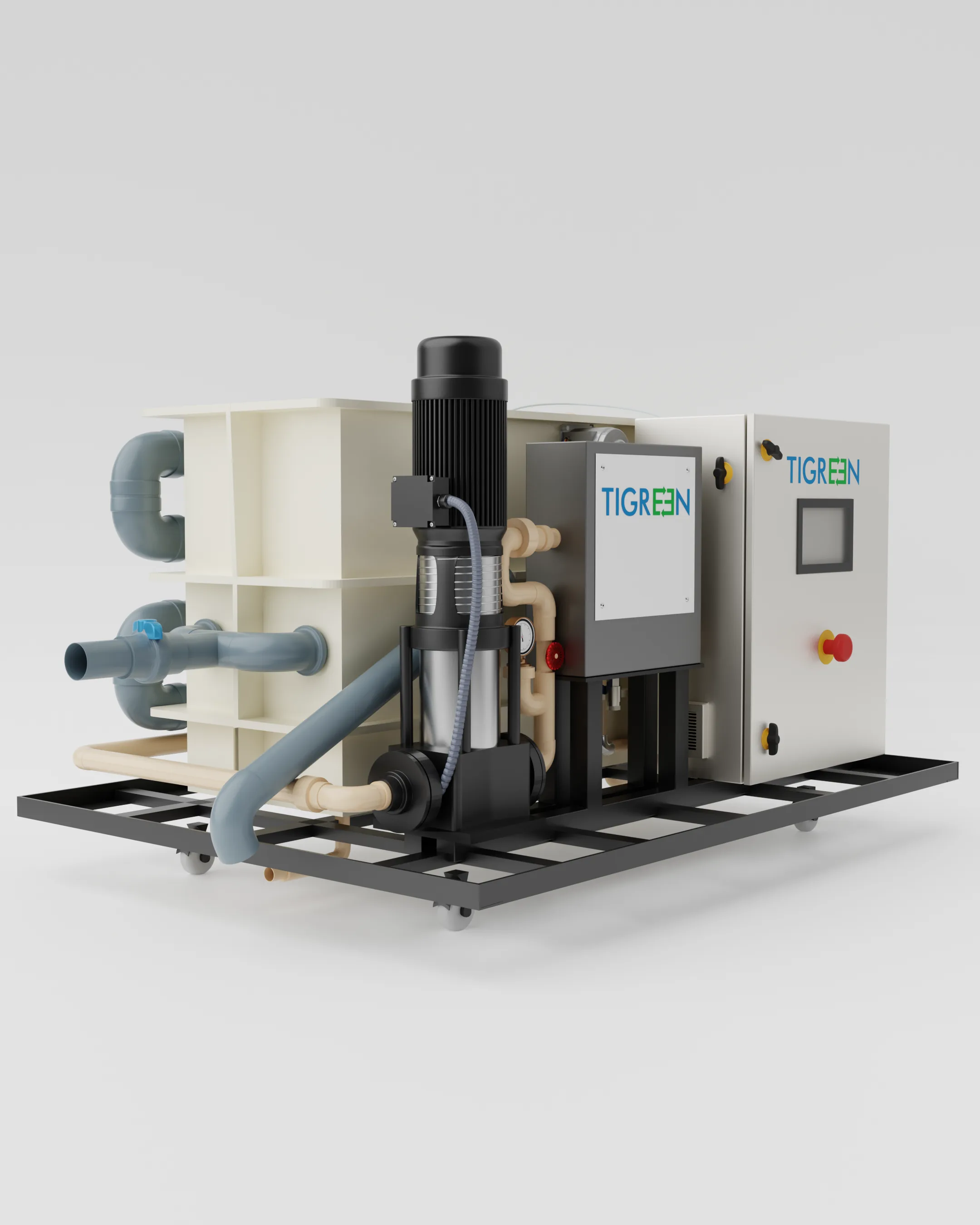
Tigreen's radical microbubble technology is designed around physical separation rather than sensitive biological pools, allowing massive Opex reductions:
- IoT Automation (90% Labor Savings): Our cloud-based IoT system continuously monitors flow parameters, automatically adjusts chemical dosing pumps, and alerts support teams in real time. You do not need a dedicated operator on-site.
- Low-Power Kinetic Design: Our proprietary microbubble nozzles generate millions of bubbles using low-pressure pumps, consuming 40% less electricity than standard aeration blowers.
- Minimal Sludge Production: High-efficiency flotation yields thick, pre-concentrated sludge that requires 70% less drying time and disposal volume.
A Simple Calculation Example (100 KLD Plant)
For a typical 100 KLD commercial complex plant, a conventional setup costs around $2,500 (₹2,00,000) per month in electricity, chemicals, and dedicated operator salaries. A Tigreen automated system cuts this down to less than $1,000 (₹80,000) per month—saving over $18,000 (₹14,00,000) annually, which directly funds the equipment payback schedule.
About the Author: Tigreen Team
The Tigreen Team consists of expert process engineers, environmental compliance specialists, and sustainability innovators working to design high-efficiency, space-saving wastewater recycling systems.
