Beyond Wastewater: 6 Advanced Applications of Radical Bubble Purification (RBP) Technology

Expanding the Boundaries of Environmental Engineering
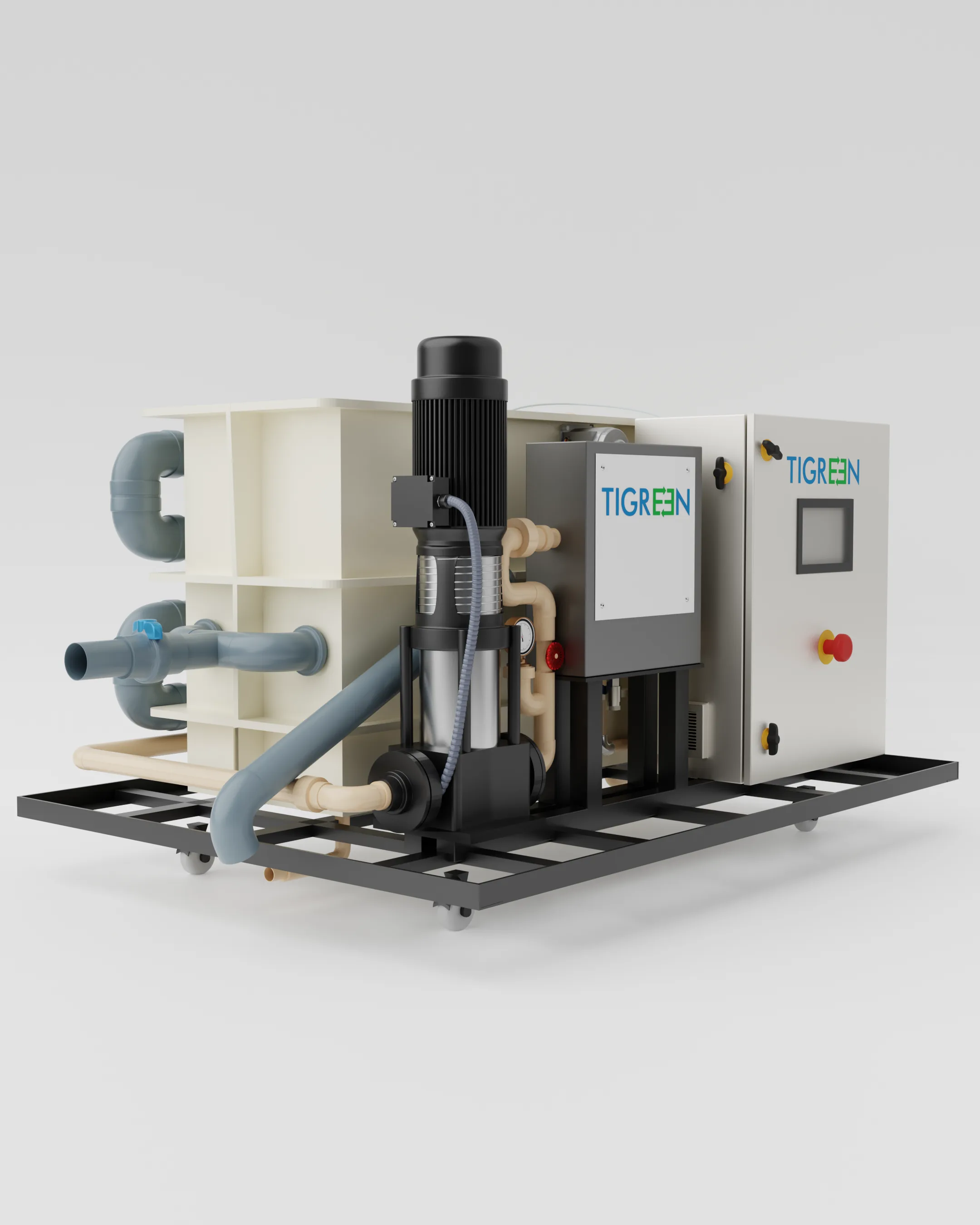
Tigreen's patented Radical Bubble Purification (RBP) technology is widely recognized for its game-changing efficiency in treating industrial laundry effluents and municipal sewage. By utilizing sub-10 micron microbubbles, these compact packaged systems achieve 85% water reuse within the footprint of a single car parking space.
However, the physical and chemical principles behind RBP—specifically, high boundary-layer electrostatic charge, micro-scale buoyancy, and cavitation-induced free radical generation—extend far beyond traditional wastewater treatment. This article explores six advanced, frontier applications of RBP technology in nuclear engineering, marine desalination, soil science, and hazardous waste remediation.
1. Tritium Separation in Nuclear Cooling Water
Tritium (a radioactive isotope of hydrogen) is a major byproduct in nuclear power generation, commonly found in reactor cooling pools and wastewater. Because tritium atoms replace normal hydrogen in water molecules to form tritiated water (HTO), conventional filtration, chemical precipitation, and standard reverse osmosis are completely ineffective at separating it.
RBP technology introduces a novel separation mechanism:
- Isotopic Interfacial Concentration: Due to differences in molecular weight and vibrational frequencies, tritiated water molecules exhibit slightly different adsorption kinetics at gas-liquid interfaces compared to normal water.
- Charged Boundary Capture: RBP's negatively charged sub-10 micron microbubbles provide an exceptionally dense surface-area-to-volume ratio. Under specific partial pressures, they selectively attract and concentrate tritiated ions in the bubble's boundary layer, allowing them to be separated as they rise to the surface.
2. Sea Water Desalination Pre-treatment
Reverse Osmosis (RO) is the global standard for seawater desalination, but it is highly vulnerable to membrane fouling. Algae blooms, colloidal silica, and organic silts quickly plug membrane pores, requiring frequent chemical cleanings and reducing membrane life.
Applying RBP as a pre-treatment stage acts as an automated shield for RO systems:
- Flocculation-Free Flotation: Microbubbles attach directly to microscopic algae and silica particles, floats them to the surface without requiring heavy dosage of coagulant chemicals.
- Membrane Life Extension: By removing up to 99% of suspended solids and colloidal matter before the saltwater enters the RO membranes, RBP extends membrane operational lifespans by up to 300% and reduces membrane maintenance costs.
3. Detoxification of Contaminated Soil
Industrial activities often leave soil saturated with heavy hydrocarbons, chlorinated solvents, and toxic metal complexes. Traditional remediation requires excavating and dumping soil or using harsh chemical solvents.
RBP provides a cleaner, localized soil-washing solution:
The contaminated soil is mixed into a water-based slurry. The RBP system injects microbubbles into the slurry. Hydrophobic organic contaminants (like petroleum oils and solvents) are naturally attracted to the gas-liquid interface of the microbubbles. The bubbles lift these toxins out of the heavy soil slurry and collect them in a concentrated surface sludge layer, leaving clean, detoxified soil behind.
4. PCB and Dioxin Biodegradation
Polychlorinated Biphenyls (PCBs) and dioxins are persistent organic pollutants (POPs) that resist biological decay and accumulate in the food chain. Because of their stable double-ring benzene structure, breaking them down requires high energy.
RBP achieves chemical degradation through microbubble collapse cavitation:
- Hydroxyl Radical (.OH) Generation: As sub-10 micron bubbles rise, hydrostatic pressure increases relative to their size, causing them to shrink and spontaneously collapse.
- Cavitation Energy: The violent collapse of these microbubbles generates localized temperatures of several thousand Kelvin and extreme pressure shockwaves. This shears water molecules apart, creating highly reactive hydroxyl free radicals (.OH) that instantly crack the chlorine-benzene rings of PCBs, rendering them biodegradable and non-toxic.
5. Composting & Agricultural Fermentation Waste
Industrial composting and livestock farming generate highly concentrated organic slurries that undergo anaerobic digestion, releasing toxic odors (hydrogen sulfide and ammonia) and stalling the composting process.
RBP optimizes organic decomposition through micro-scale aeration:
By saturating organic slurries with oxygen-carrying microbubbles, RBP maintains high dissolved oxygen levels throughout the dense mixture. This suppresses anaerobic bacteria (which cause septic odors) and stimulates beneficial aerobic bacteria, accelerating the composting kinetics and converting agricultural waste into stable compost in half the time.
6. Ecological Restoration of Natural Water Bodies
Eutrophication—caused by agricultural runoff loading lakes and ponds with excess nitrogen and phosphorus—leads to toxic algae blooms and hypoxic "dead zones" where fish suffocate.
RBP restores natural ecosystems without chemical inputs:
Portable RBP skids float on the water body, drawing in eutrophied water and injecting microbubbles. The negatively charged bubbles attach to algae cells and suspended phosphorus particulates, lifting them to the surface for physical skimming. Simultaneously, the slow rise velocity of the microbubbles ensures deep, uniform oxygenation of the lake bed, reversing hypoxia and restoring aquatic health.
RBP Application Matrix
| Advanced Application | Primary Contaminant Target | Core RBP Mechanism | Environmental Impact |
|---|---|---|---|
| Nuclear Tritium Separation | Tritiated water molecules (HTO) | Isotopic boundary-layer concentration | Safe nuclear cooling waste management |
| Desalination Pre-treatment | Algae blooms & colloidal silica | Flocculation-free flotation & removal | 3x RO membrane lifespan extension |
| Soil Detoxification | Hydrocarbons & heavy metals | Slurry boundary-layer attraction | In-situ reclamation of industrial land |
| PCB & Dioxin Degradation | Persistent organochlorines | Cavitation-induced free radical oxidation | Complete destruction of POP compounds |
| Composting Optimization | Hydrogen sulfide & ammonia gases | Micro-scale aerobic oxygen saturation | Odourless agricultural waste recycling |
| Lake & Pond Restoration | Phosphorus load & blue-green algae | Float-skimming & hypolimnetic aeration | Reversal of hypoxia & toxic eutrophication |
Bridging the Gap from Theory to Scale
The versatility of Radical Bubble Purification resides in the physics of the micro-scale. Because sub-10 micron gas bubbles exhibit high surface charges and slow rise dynamics, they serve as highly efficient transport media and chemical micro-reactors. As global industries face stricter mandates, utilizing clean physical-chemical interfaces like RBP will remain essential to achieve sustainable, circular engineering goals.
About the Author: Tigreen Team
The Tigreen Team consists of expert process engineers, environmental compliance specialists, and sustainability innovators working to design high-efficiency, space-saving wastewater recycling systems.
